Case Studies
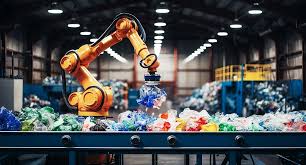
To understand how AI is currently being applied to recycling and waste management, this section examines recent initiatives in Centerville, Ohio, and San Francisco, California, as well as companies like AMP Robotics. These examples reveal that local governments and private companies are taking steps toward addressing this issue with AI technology.
Centerville, Ohio: Camera-Based Contamination Reduction
Solution: Camera-based technology to identify and flag non-recyclable items in real-time
Centerville launched a project to address recycling contamination using camera-based technology. The cameras identify and flag items that do not meet local recycling guidelines in real-time, allowing for intervention and proper disposal. After items are addressed, the city contacts residents with notecards offering tips and tricks on recycling to help mitigate recurring issues.
Results:
- Reduced contamination rates
- Improved efficiency in waste management systems
- Lower production costs
- Better resident education on proper recycling
City Manager Wayne Davis claims this new process will lower production costs and improve the overall efficiency of the waste organization and collection.
San Francisco: Oscar Sort AI Assistant
Solution: Oscar Sort - an interactive AI recycling assistant
San Francisco faced high contamination rates in recycling and compost bins in public spaces, along with difficulty engaging residents and visitors in proper waste sorting. To combat this, they launched three installations of Oscar Sort at the city’s Ferry Building and Exploratorium.
The technology identifies the item the user is discarding and directs them to the appropriate bin: compost, recycling, or landfill.
Results:
- Improved waste sorting accuracy
- Reduced recycling contamination
- Increased public awareness and participation
- Contributed toward the city’s “Zero Waste by 2030” initiative
This demonstrates how large urban areas can leverage AI as both an education and operational sustainability tool, showing the value of integrating interactive, user-facing technology into waste management policy.
AMP Robotics: Industrial-Scale AI Sorting
Solution: AI platform with cameras and robotic sorting arms
AMP Robotics developed an AI platform that utilizes cameras to scan mixed waste streams and identify materials based on visual cues such as shape and color, enabling physical sorting and placement on corresponding conveyor belts.
Impressive Performance Metrics:
- Recognizes over 100 material categories
- Operates at 80 items per minute
- Achieves up to 99% accuracy
- Reduces reliance on manual labor
- Increases data collection efficiency
AMP Robotics’ innovation demonstrates how private and public sectors can collaborate to efficiently address recycling issues and shows the potential of AI automation to scale efficiency improvements nationwide.
Key Takeaways
These case studies demonstrate that AI technology is already proving effective at:
- Reducing contamination in recycling streams
- Increasing sorting accuracy and speed
- Educating the public on proper waste disposal
- Lowering operational costs for municipalities
- Providing real-time data for policy decisions
However, these efforts remain fragmented and localized. Statewide policy is needed to scale these successes.